
Two houses and what they say about community
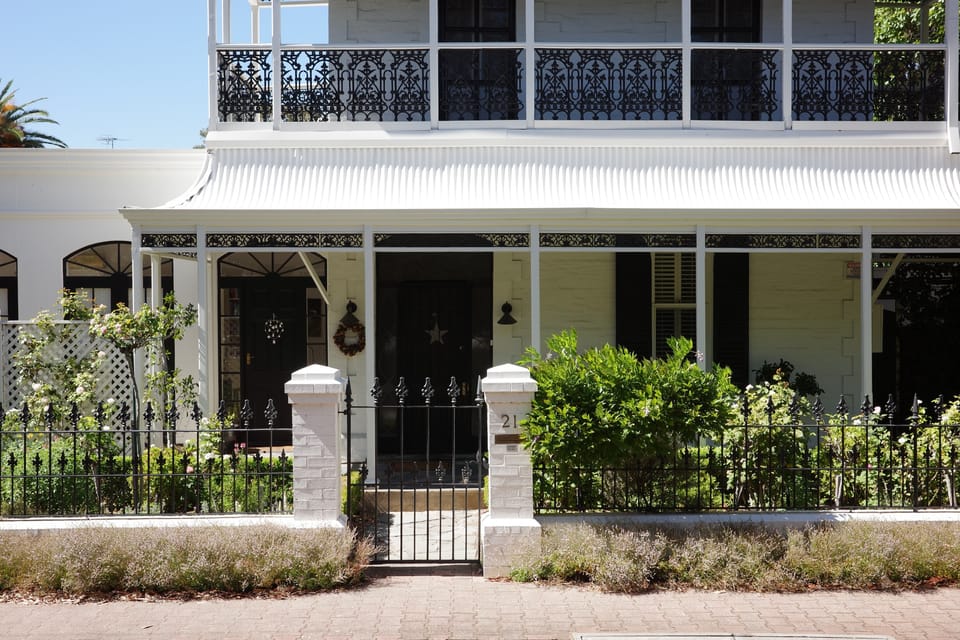
There are these two houses near where I live. They’re right across the street from each other and both are two-storey, of a similar size, and each would (if we discount the size of the land) be considered within reach of a well-to-do upper-middle class buyer. Yet, each house is worlds apart in how it relates to the public realm of the street that it sits on.
House A (refer to the feature image at the top of this post) sits close to the street, behind a fence that clearly marks a boundary but does not hide the house or its inhabitants. A verandah wraps around both levels of the original house, shading the walls and windows and creating a threshold between the house’s interior and the outside world. Windows are regular but controlled; their slender width and height of the sill mean we can glimpse inside and see that there might be activity happening without the inhabitants of the house feeling exposed. A short path clearly and directly links the gate to the main entry of the house.
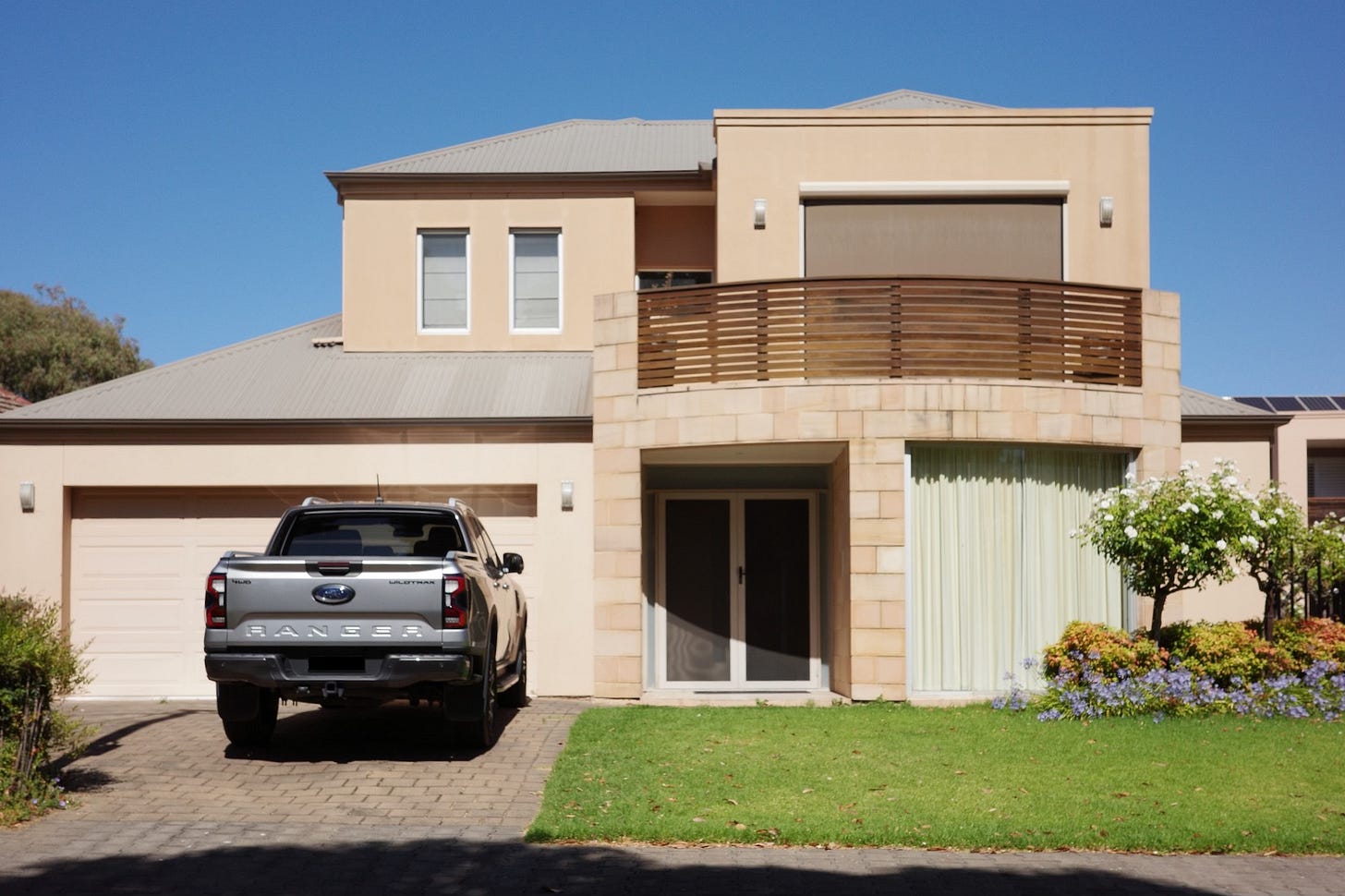
House B retreats from the street over an expanse of lawn and paving. Of the ground floor, a full half is garage door. In the centre, a vestigial porch shelters opaque double doors; to the right, full-height windows (presumably to a so-called ‘master’ bedroom) have curtains that looks like they are permanently drawn. The unshaded, east-facing windows of the upper storey are similarly blocked off: this house feels like a fortress, whose internal happenings are completely divorced from the street. Paving from the street leads directly to the garage and the ‘pedestrian’ door is an afterthought: this house is meant to be arrived at by car.
A hundred years separates these houses and yet I contend that, more than any superficial difference in building material, quality or style, it is the relationship to the public realm that separates these two houses the most. To put it succinctly, I would say that House A was built to be a part of public life while House B seeks to separate itself from public life as much as possible.
House A feels approachable. There are many steps of transition between it and the street: the gate, the front yard, the sheltered verandah space, and what is likely a sitting room beyond the front door. Riken Yamamoto, drawing on Arendt, writes about the importance of these thresholds in mediating between the private inner life of the house and the public world of the street and society at large. In allowing for this mediation, both the public and private worlds are separated and yet, paradoxically their connection is strengthened.
How can this be so? A comparison to House B, with its sharp distinction between the private life of the house and the public life of the street is instructive. In a house like this it is much harder to participate in life outside: you can’t see out (the blinds are always drawn, and the rooms facing the street are almost certainly bedrooms which are only occupied when sleeping) and neither is it easy to physically go outside as when you do, you go from being 100% private to 100% public - a very stark transition. At the same time, to bring people inside means bringing them into your inner sanctum, past the bedrooms and right into the midst of where you conduct your everyday life. According to Alexander, this lack of threshold also affects how you feel in your own house: there is no space in which, passing through, you can shed the ‘mask’ you put on to be part of the outside world then you can never truly feel at home.
There are a whole host of reasons why these houses relate their inner lives to the society outside in such drastically different ways. It’s worth saying though that there is no regulation today that forces a house to be built as an island unto itself: it is always a choice. I think that in our time (maybe any time?) it can be easy to fall into the trap of thinking that the way things are done now is the only way they can ever be done. But our houses do not have to be castles. I think we need more houses like House A, houses that allow us to both come together as a community and retreat into sanctuary when we have to.
Comments ()